Argentina Wine Routes: The Complete Guide for 2026
From vineyards at 3,300 metres in the Quebrada de Humahuaca to vines that breathe Atlantic salt air near Mar del Plata — this is every wine route in Argentina worth travelling, updated monthly.
Argentina is not one wine country. It is at least eight of them, strung along more than 2,400 kilometres of the legendary Ruta 40 and spilling east toward the ocean. Sixteen provinces make wine here, across roughly 200,000 hectares of vineyard and more than a thousand working wineries — yet most travellers only ever see Mendoza. That's a little like visiting Italy and never leaving Tuscany.
This guide covers all of it: the icon estates and the boutique projects, the routes everyone knows and the ones almost nobody writes about in English — Córdoba's Jesuit wine legacy, San Juan's limestone valleys, the brand-new solar-powered Wine Train through a UNESCO World Heritage gorge. Use it to build your itinerary, then explore every winery, route and region on our interactive 3D map.
Mendoza: The Heart of Argentine Wine
Mendoza produces around 70% of Argentina's wine and belongs to the Great Wine Capitals network alongside Bordeaux and Napa. But "Mendoza" is really three distinct wine routes, each with its own personality — and you should treat them as separate day trips rather than trying to blend them.
Luján de Cuyo — The Cradle of Malbec
Twenty minutes south of Mendoza city, Luján de Cuyo is where Argentine Malbec earned its reputation, with old-vine vineyards planted between roughly 900 and 1,100 metres. This is the land of the icon wineries — Catena Zapata's Mayan-pyramid temple to Malbec, Luigi Bosca's century of family winemaking, Achaval Ferrer's single-vineyard bottlings — but also of warm, family-scale estates where the winemaker may pour your tasting personally. Districts like Agrelo, Perdriel and Vistalba reward slow travel: plan two, at most three, wineries per day with a long lunch in between.
Several winery restaurants in Luján and the Uco Valley now carry MICHELIN Guide recognition — a first for Argentina and a sign of how far wine-country gastronomy here has come.
Maipú — Bicycles, Olive Groves and Century-Old Bodegas
East of the city, Maipú is Mendoza's most traditional and most accessible route — flat, close, and famously explorable by bicycle. Vineyards sit lower (650–850 metres) on deeper clay soils, giving rounder, fruit-forward Malbec and Bonarda. The route mixes centenary wineries built by Italian and Spanish immigrants with olive oil producers and vinegar houses. Bodega Domiciano in Coquimbito, built in 1919 from adobe brick, is a good example of the district's blend of history and modern hospitality, with a full gastronomic offer added for the 2026 season.
Valle de Uco — Altitude, Ambition and the New Argentina
An hour to ninety minutes south, the Uco Valley is where modern Argentine wine is being written. Vineyards climb from 900 to over 1,500 metres against a wall of Andean peaks, and the sub-regions have become names collectors track the way Burgundy lovers track villages: Gualtallary and its chalky, high-energy Malbec and Chardonnay; Paraje Altamira's stony alluvial fan; Los Chacayes and San Pablo pushing into the mountains. Zuccardi's concrete cathedral in Altamira, Salentein's art-filled estate and Domaine Bousquet's organic operation in Gualtallary anchor the route — Bousquet's "Gaia Experience" now combines lodging, open-fire gastronomy and vineyard adventure in a single stay, one of the clearest examples of the 360° experiences reshaping Argentine wine tourism in 2026.
Boutique Wineries Worth the Detour
Every wine region has its icons; Argentina's real charm hides one dirt road further. Boutique estates — often family-run, often organic, always personal — are where a tasting turns into an afternoon with the people who actually make the wine. A few threads to follow:
In the Uco Valley, small producers around Vista Flores and Tupungato pour wines that rarely leave the country. Projects like Famiglia Banno — a limited-production house sourcing exceptional parcels from small growers across Mendoza, capped at around 35,000 bottles a year — show a different model of boutique winemaking: less about the château, more about the vineyard hunt. In Luján de Cuyo, family bodegas like Bonfanti keep eco-tourism and small-batch tradition alive minutes from the icon estates.
The pattern repeats across the country: Jujuy's entire wine industry is boutique by definition; Córdoba's serrano vineyards are almost all family projects; Patagonia's most celebrated wines come from tiny, obsessive estates. Wherever this guide mentions a region, assume there's a small producer nearby worth calling ahead for — and find them all, tier by tier, on our winery directory and interactive map.
Experience Fine Wines in Mendoza

Exclusive Wine Selection
Explore our curated collection of premium Argentine wine Tours.


Wine Journeys Through Mendoza
Mendoza, Argentina’s wine capital, offers world-class Malbec vineyards and stunning Andes landscapes.
The North: Wine at the Edge of the Sky
Salta and the Calchaquí Valleys
Argentina's north grows some of the highest vineyards on Earth. The story begins in the 18th century, when Jesuit missionaries planted the first vines, and today stretches from 1,750 metres above sea level to dizzying plantings at over 3,000 metres near Molinos and Payogasta.
Cafayate is the capital of it all — a sun-drenched town surrounded by more than 2,700 hectares of vines, roughly three-quarters of Salta's entire vineyard area. This is the kingdom of Torrontés, Argentina's signature aromatic white, which reaches its most electric expression in the high desert air. Piattelli, El Esteco and Amalaya all offer polished visits in and around town; the drive in along Ruta 68 through the Quebrada de las Conchas — a canyon of wind-carved red rock — is reason enough to come.
Deeper into the valleys along Ruta 40, the road turns to gravel and the wineries turn legendary. Colomé, founded in 1831 and farming some of the oldest pre-phylloxera vines on the planet, sits at 2,300 metres and houses the world's only museum dedicated to light artist James Turrell — arguably the most surreal winery visit in South America. Nearby Tacuil and the pretty colonial village of Cachi complete a route that mixes wine with adobe churches, cactus fields and silence.

Jujuy: Extreme Altitude and the New Wine Train
If Salta is high, Jujuy is extreme. In the Quebrada de Humahuaca — a UNESCO World Heritage gorge painted in mineral reds and ochres — vines grow at up to about 3,300 metres, producing intense, thick-skinned Malbec and Syrah in quantities so small the whole region is measured in thousands of bottles, not millions. The young Ruta del Vino Jujuy now links more than 20 producers across 150 kilometres, from the temperate valleys up into the gorge, and was just named Best Wine Route at the 2026 Winexplorers Awards.

The headline for 2026: on July 26, the Tren Solar de la Quebrada — Latin America's first solar-powered train — launches its Wine Train (Tren del Vino). The experience runs the scenic line between Volcán and Tilcara with sommelier-guided storytelling on board and tasting stops along the way: Tumbaya with Antropo Wines and Bodega El Molle, a paired lunch and vineyard walk at Amanecer Andino near Purmamarca, and tastings with Bodega Fernando Dupont and Yanay at Maimará. Zero-emission rail travel through a World Heritage landscape, ending in a glass of the world's highest-altitude wine — nothing else in South American wine tourism looks like this right now.
La Rioja and Catamarca
West of the tourist trail, La Rioja's Famatina and Chilecito valleys are the historic home of Torrontés Riojano — the grape's very name points here — alongside juicy, food-friendly Bonarda. Catamarca's small valleys (Tinogasta, Fiambalá) add another chapter of high-desert winemaking. Neither route is polished; both reward travellers who like their wine regions raw and their welcomes personal.

From Jujuy: Full-Day Tour to Salinas Grandes and Purmamarca
This full-day excursion from Jujuy will discover the most interesting places.
Read more about - From Jujuy: Full-Day Tour to Salinas Grandes and Purmamarca

Expert Wine Pairing Advice

Gamboa Winery
The Bodega Gamboa Small-Group Wine Tasting Tour offers a guided tasting of various Malbec wines at a modern winery near Buenos Aires, followed by a vineyard picnic with local cheeses. It’s an authentic Argentine wine experience close to the city.
Patagonia
Cool-Climate Wines at the End of the World
Patagonian wine is Argentina's counter-argument: low altitude instead of high (200–400 metres), cool winds instead of desert sun, and Pinot Noir, Merlot, Chardonnay and old-vine Semillón instead of blockbuster Malbec.
Neuquén — San Patricio del Chañar
A wine region willed into existence in the early 2000s, El Chañar is a compact, modern route where Bodega del Fin del Mundo (the pioneer), Familia Schroeder — where excavations famously unearthed dinosaur fossils, now displayed in the winery — and Malma sit within minutes of each other. Easy to visit, family-friendly, and an ideal add-on to a northern Patagonia road trip.
Río Negro — The Alto Valle
The historic heart of Patagonian wine follows the Río Negro through General Roca, Mainqué and Villa Regina, where century-old farms grow pears, apples and some of Argentina's most coveted Pinot Noir. Humberto Canale, founded in 1909, carries the valley's history; Chacra, the biodynamic Pinot Noir project built on vines planted in 1932 and 1955, carries its international fame. This is slow, orchard-country wine touring at its best.
Chubut — The Last Frontier
Wine's southern limit keeps moving. Around Trevelin in the Andean foothills and near Sarmiento at the 45th parallel, ventures like Casa Yagüe and Otronia — among the southernmost commercial vineyards on Earth — are making tense, mineral whites and Pinot Noir that critics now score with the country's best. Otronia's vineyards beside Lake Musters may be the most improbable great terroir in the Americas.
Pair any of these with Bariloche's lakes or a glacier itinerary further south — Patagonia is one of the few places where a wine route and a National Geographic landscape share the same day.
Explore Our Premium Tours


Buenos Aires Province: Ocean Vineyards and Sierra Surprises
The newest line on Argentina's wine map runs along the Atlantic. Around Chapadmalal and Balcarce, just south of Mar del Plata, maritime breezes and limestone-rich soils produce what locals call vinos de mar — sea wines. Sauvignon Blanc and Albariño with saline snap and herbal freshness, plus taut Chardonnay and Pinot Noir, from vineyards where you can genuinely smell the ocean. Trapiche's Costa & Pampa estate opened this frontier and remains its essential visit.
The coast has also become a summer stage for wine culture: in early 2026, Terrazas de los Andes ran its "After Wine" sessions in Mar del Plata — high-altitude Pinot Noir and Chardonnay served to vinyl records and live music — while Chandon toured the beach towns with its Summer Roads campaign. Wine, in Buenos Aires province, is officially part of beach season.
Inland, two more surprises: vineyards within a day trip of Buenos Aires city (around Campana and Exaltación de la Cruz) for travellers who can't reach the Andes, and the Saldungaray–Sierra de la Ventana route in the province's southern hills, where a small cluster of producers makes serrano wines in one of Buenos Aires' prettiest landscapes.
Argentina · Wine, Patagonia & Andean Escapes
Discover Argentina's Finest Wine & Travel Experiences
From Patagonia's edge to the Andean valleys — handpicked stays for the international traveller seeking the very best of Argentina
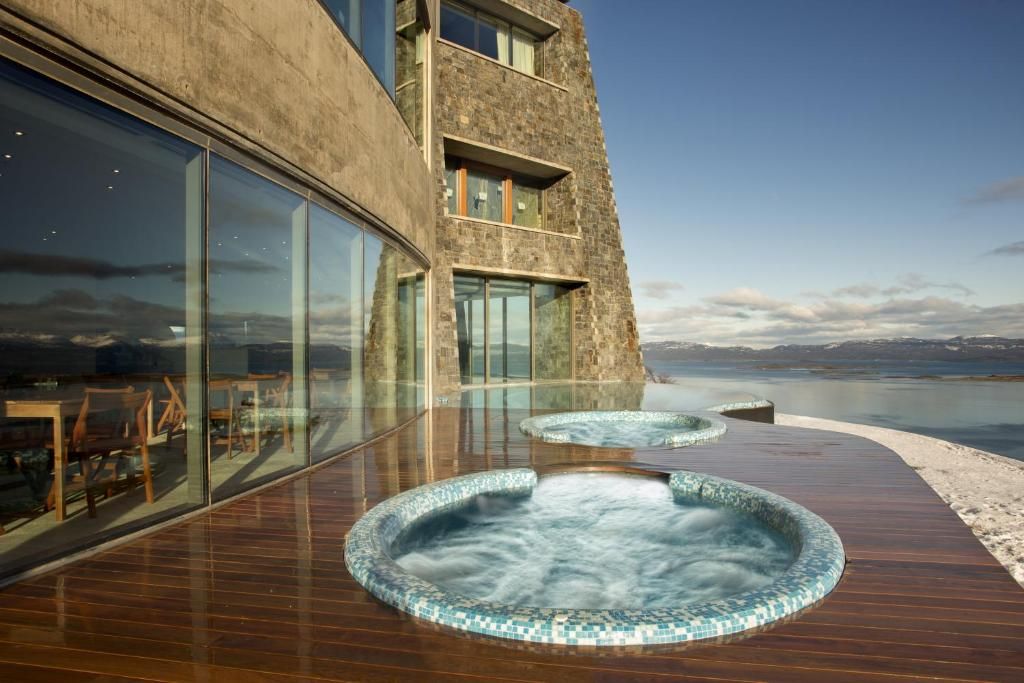
Arakur Ushuaia Resort & Spa
📍 Ushuaia, Tierra del Fuego
Set within the Cerro Alarkén Nature Reserve, 800 feet above the world's southernmost city. Panoramic views of the Beagle Channel, a glacier-fed spa, guided trekking from the hotel's doorstep, and the acclaimed La Cravia restaurant serving the bold flavours of Tierra del Fuego.
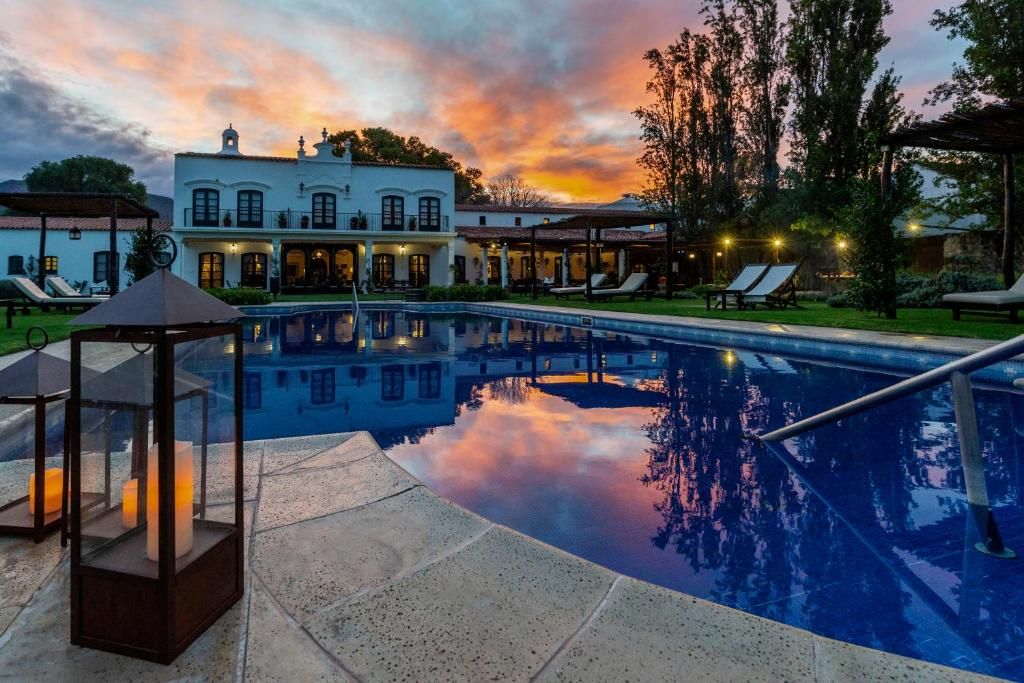
Patios de Cafayate
📍 Cafayate, Salta
An authentic Salta-style retreat within the historic grounds of Bodega El Esteco, founded in 1892. Colonial courtyards draped in vines, rooms furnished with antiques, a complimentary glass of Torrontés each afternoon, and chef-driven regional cuisine at restaurant La Rosa.
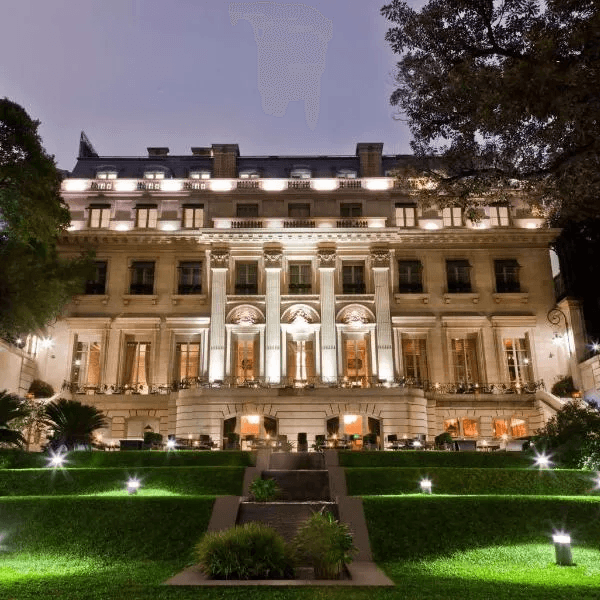
Buenos Aires
📍 Buenos Aires, Argentina
The Paris of South America — tango, world-class steakhouses, European architecture and a cultural scene that never sleeps. From the glamour of Palermo to the colour of Caminito, Buenos Aires is the perfect gateway to Argentina's greatest adventures.
Casa de Uco
📍 Valle de Uco, Mendoza
A modernist retreat across 320 hectares of vineyards at the foot of the Andes. Sustainable architecture, an award-winning farm-to-table restaurant, a spa offering grape and Malbec treatments, and sweeping views of vines, lagoons and snow-capped peaks.
San Juan: The Underrated Neighbour
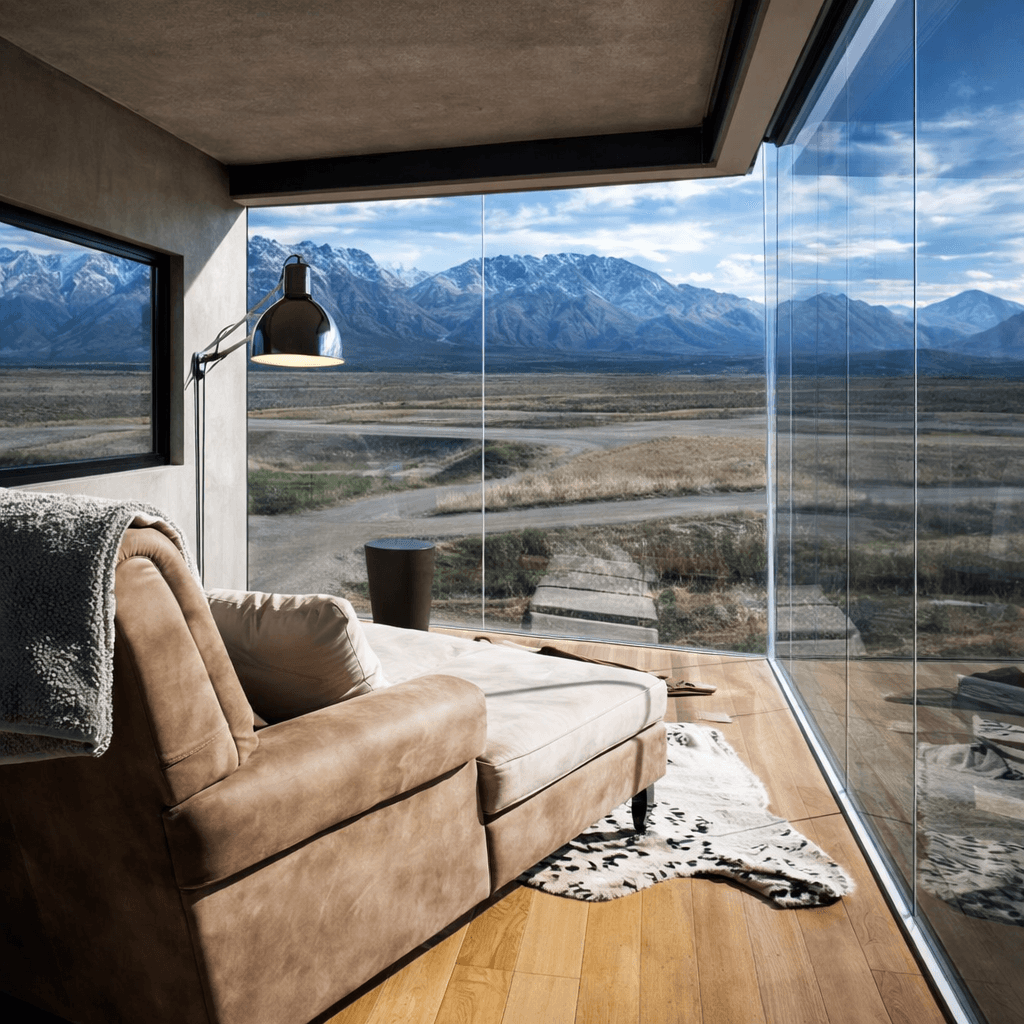
Drive two hours north of Mendoza and the crowds vanish while the quality doesn't. San Juan is Argentina's second-largest wine province, spread across five valleys — Tulum, Zonda, Ullum, Calingasta and Pedernal — with Syrah as its calling card.
The Pedernal Valley is the one to watch: a high (1,100–1,500 metres), limestone-and-silica basin producing Malbec and Syrah of genuine tension and minerality that are quietly revolutionising the province's reputation. The Tulum and Zonda valleys offer the classic visits — Callia, Las Marianas, Segisa and a string of family bodegas — usually without another tour bus in sight, and often paired with San Juan's other specialty, olive oil tasting. If you want Mendoza's landscapes with none of Mendoza's queues, this is your route.
Córdoba: The Route Almost Nobody Writes About
Here's a fact that surprises even Argentines: the first American wine ever served at the Spanish royal court came from Córdoba, made by Jesuits at their Jesús María estancia in the 17th century. Wine here predates Mendoza's fame by centuries — and after a long silence, it's back.
Colonia Caroya
Colonia Caroya, north of Córdoba city on the old Camino Real, is the historic core: Friulian immigrants rebuilt the wine tradition in the late 1800s, and today the centenary cooperative La Caroyense pours alongside the modern, high-end Terra Camiare. Come hungry — the salames and Friulian cooking of Caroya are half the reason to visit, and the Jesuit estancia (a UNESCO site) makes it a full cultural day.
Calamuchita, Traslasierra and the Serrano Valleys
Calamuchita and Traslasierra are the serrano wine country: small vineyards tucked into mountain valleys, many organic or biodynamic, with the Sierras Grandes and Cerro Champaquí as backdrop. The drive to Traslasierra over the Altas Cumbres road is spectacular on its own; time your visit for the Traslasierra Wine Fest (2026 edition confirmed) and you'll taste the whole valley's new vintages in one afternoon. Sierras Chicas and the Punilla valley round out a provincial route — branded the Caminos del Vino de Córdoba — where Malbec and Cabernet share vineyard rows with local curiosities like the Isabella grape.
Córdoba wine touring is intimate by nature: call ahead, expect the owner to greet you, and don't expect to leave without a story.
Córdoba is waiting for you


One Pearl in Argentina
La Cumbrecita is a picturesque alpine-style village in Córdoba, Argentina. Surrounded by forests and waterfalls, it offers hiking trails and a peaceful atmosphere. A pedestrian-only town, it’s ideal for nature and culture lovers.

When to Go: A Season-by-Season Cheat Sheet
Harvest (late February–April)
The most electric time in wine country: grapes coming in, crush pads working, harvest festivals everywhere — headlined by Mendoza's Fiesta Nacional de la Vendimia in early March. Book wineries and hotels well ahead.
Autumn (April–May)
The insider's pick. Vineyards turn gold and crimson, the light is extraordinary, crowds thin out, and bodegas have time for you. Arguably the best photography season Argentina offers.
Winter (June–August)
Quiet cellars, honest prices, snow on the Andes behind the vines — and in Mendoza, the option to pair wine with a ski day at Las Leñas or Penitentes. High-altitude routes (Salta, Jujuy) enjoy dry, sunny winter days, making this an ideal season for the north.
Spring (September–November)
Budbreak green, mild weather, and wide-open reservations. Excellent for cycling Maipú or driving the Calchaquí valleys.
Summer (December–February)
Hot in the vineyards but peak season on the Atlantic route — exactly when Chapadmalal's ocean vineyards and the coastal wine scene are at full throttle.
Practical Tips From the Road
Plan a maximum of two or three wineries per day — Argentine visits are long, generous and usually end in a bigger tasting than you expected. Book ahead almost everywhere; drop-in culture is rare, especially in the Uco Valley and Cafayate. Solve driving before you solve anything else: distances are real, police checks are common, and every region has reliable drivers and tour operators (in Mendoza, our curated tours page is the place to start). Carry sun protection year-round — most Argentine vineyards sit under fierce desert sun, even in autumn. And buy at the cellar door: many bodegas keep small-lot wines you will simply never see in a shop, and they travel home better than any souvenir.
Ready to plan your Mendoza adventure? Explore our complete guide to Mendoza wine tours — zones, prices, and insider tips included. 👉 https://www.vinosargentinos.com/mendoza-wine-tours
FAQ
What is the most famous wine route in Argentina?
Mendoza — specifically Luján de Cuyo for classic Malbec and the Valle de Uco for high-altitude wines — is Argentina's flagship route and one of the world's great wine destinations.
Which Argentine wine route has the highest vineyards?
The north: Salta's Calchaquí Valleys reach beyond 3,000 metres, and Jujuy's Quebrada de Humahuaca grows vines at around 3,300 metres — among the highest commercial vineyards on Earth.
Can I visit wineries near Buenos Aires?
Yes. Beyond day-trip vineyards close to the city, the Chapadmalal route near Mar del Plata offers Argentina's unique ocean-influenced wines, about five hours from the capital.
What's new in Argentine wine tourism in 2026?
The Jujuy Wine Train (launching July 26, 2026) aboard Latin America's first solar-powered train; MICHELIN-recognised winery restaurants in Mendoza; immersive stay-and-taste programs like Domaine Bousquet's Gaia Experience; and the consolidation of the Atlantic "sea wine" route.
What's New — July 2026
This guide is updated monthly. Latest additions:
Jujuy's Ruta del Vino named Best Wine Route at the Winexplorers Awards 2026, with the solar-powered Wine Train launching July 26. Terrazas de los Andes and Chandon bring wine culture to the Atlantic coast for summer 2026. MICHELIN Guide recognition consolidates Mendoza's winery restaurants among the world's best wine-country dining.
Utilizamos cookies para mejorar tu experiencia y rastrear los enlaces de afiliados. Al continuar, aceptás nuestro uso de cookies.