
Argentine Syrah: The Dark Horse of South American Wine
When wine lovers think of Argentina, Malbec dominates the conversation. But there's another grape quietly rewriting the country's story — one with ink-dark color, explosive aromatics, and a character shaped by some of the world's most extreme terroirs. Born in France's Rhône Valley, Syrah has found a second home in Argentina, where high-altitude vineyards, wide temperature swings and intense Andean sun push the variety to extraordinary heights.
Altitude is the great differentiator. In Mendoza's Luján de Cuyo and the Uco Valley, vines sit between 900 and 1,200 meters; in Salta's Calchaquí Valleys, Syrah climbs above 2,000. At lower elevations expect richness — dark plum, smoked meat, cracked pepper. Higher up, the profile turns to violet, red fruit and graphite, closer to northern Rhône elegance than New World power. Both styles are compelling, and both are unmistakably Argentine. For the curious drinker ready to look one step beyond Malbec, Syrah rewards exploration — and still offers exceptional value.
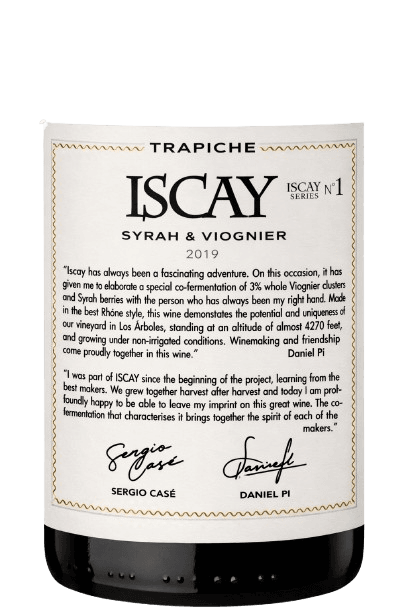
Syrah Country: Where to Drink It Where It's Born
There's a difference between drinking Argentine Syrah at home and drinking it where the grapes grew. In Cafayate, that difference is everything.
Salta's Calchaquí Valleys sit above 1,600 meters — some vineyards climb past 2,000 — making them among the highest wine-producing lands on the planet. The air is thinner, the sunlight more intense, the temperature swings between day and night so dramatic that the grapes develop a tension and aromatic complexity you simply cannot replicate anywhere else. This is where Argentine Syrah reaches its most expressive, most singular form.
Wine tourism in this corner of Argentina is still intimate by global standards. You won't find the crowds of Napa or the commercial machinery of Bordeaux. What you will find are family-owned bodegas where the winemaker pours your glass personally, colonial architecture draped in bougainvillea, and landscapes so vast they recalibrate your sense of scale.
Cafayate itself is a small town with an outsized wine identity. The main square is lined with tasting rooms and restaurants serving locro and empanadas tucumanas alongside bottles of high-altitude Syrah and Torrontés. A walk through the Quebrada de las Conchas — a canyon of red rock formations sculpted by wind and time — is as essential as any cellar visit.
For those who want full immersion, staying at a wine hotel on the estate changes everything. Waking up surrounded by vines, joining a harvest walk at sunrise, or sitting on a terrace with a glass of Syrah as the Andes turn gold at dusk — these are the moments that turn a trip into a memory.
Cafayate doesn't just produce extraordinary wine. It produces the context that makes it unforgettable.
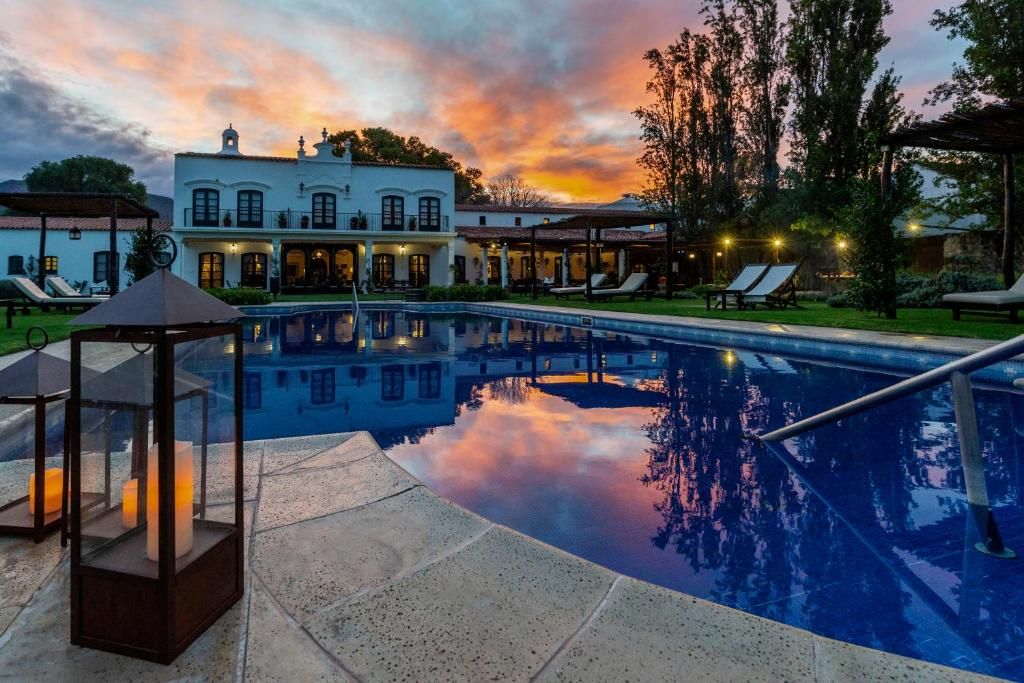
Explore Syrah Country: Wine Tours Across Argentina
Argentina is one of the few wine countries where a single grape variety can take you on a journey spanning thousands of kilometers — and Syrah is the perfect guide.
Start in Salta's Calchaquí Valleys, where Syrah grows at vertiginous altitudes above 1,600 meters. Here, guided winery tours wind through adobe bodegas and colonial villages, pairing high-altitude wines with Andean cuisine. The landscape alone is worth the trip — red rock canyons, cactus forests, and skies of impossible blue.
Move south to Mendoza, Argentina's wine capital, and the experience shifts. Syrah here is bolder, richer, shaped by the shadow of the Andes and the heat of the Cuyo sun. Wine tours in Mendoza range from intimate cellar visits and harvest experiences to full-day cycling routes through Luján de Cuyo and the Uco Valley — stopping at boutique estates where the winemaker pours your glass personally.
Further south, Patagonia opens up an entirely different chapter. The Río Negro and Neuquén valleys produce a cooler, more elegant Syrah — and combine effortlessly with some of the most spectacular touring in the world. Glacier treks, gourmet cruises, and end-of-the-world train rides await those who make the journey south.
The beauty of wine tourism in Argentina is that every region offers something genuinely different. You're not just tasting a grape — you're reading a landscape.
Book your experience, follow the Syrah, and let Argentina surprise you.
Syrah · Taste It Across the Country
From the Andes to the End of the World
Argentine Syrah grows from the high deserts of Salta to the cool rivers of Patagonia. Follow the grape across the country — and end the journey where the world runs out of road.
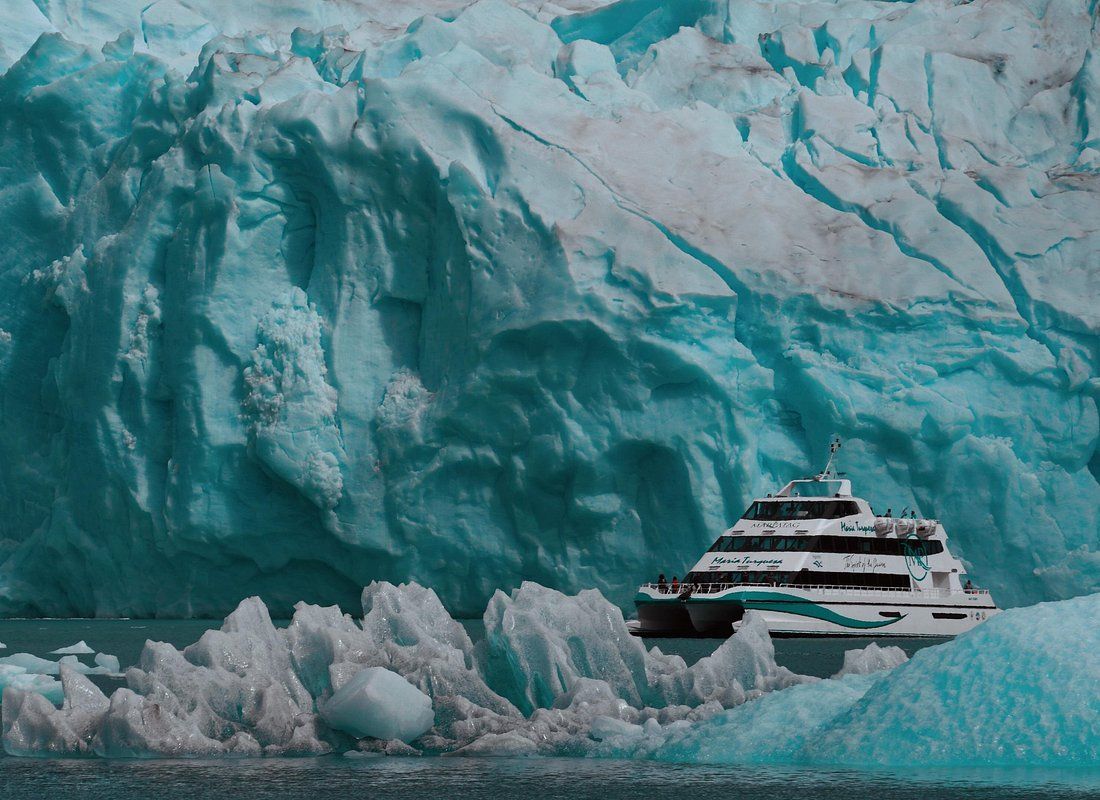
Drink Syrah Where the Andes Meet the Ice
Salta · Mendoza · Río Negro · Ushuaia · End of the World Train
Explore All Experiences →Gastronomy · El Calafate
Argentine Cuisine Experience in El Calafate
★★★★★ 14 reviews · 3 hours · Free Cancellation
Glacier · Santa Cruz
Glaciares Gourmet Navigation: Spegazzini, Upsala & Perito Moreno
★★★★½ 324 reviews · 11 hours · Free Cancellation
National Park · Ushuaia
Tierra Del Fuego National Park & Fin del Mundo Train
★★★★★ 208 reviews · 5h 30m · Free Cancellation
Guided Tour · Ushuaia
National Park & Train Trip — End of the World Guided Tour
★★★★ 442 reviews · 6 hours · Free Cancellation
Full Collection · Viator 2026
Ready for the Edge of the World?
Browse the full Patagonia collection — from glacier navigation to Fuegian cuisine, every experience is handpicked and instantly bookable
View All Patagonia Tours →Syrah Argentino: Preguntas Frecuentes
¿A qué sabe el Syrah argentino?
El Syrah argentino ofrece una personalidad dual fascinante. En climas cálidos como San Juan o el este de Mendoza, predominan las frutas negras maduras — mora, ciruela, arándano — con notas de chocolate, cuero y especias dulces. En zonas de altura como el Valle de Uco o Luján de Cuyo, el perfil vira hacia lo más fresco y elegante: pimienta negra, aceitunas negras, violetas y una acidez vibrante que recuerda a los grandes Syrahs del norte del Ródano.
¿Cuáles son las mejores regiones para el Syrah en Argentina?
San Juan es históricamente la cuna del Syrah argentino, con vinos de cuerpo generoso y fruta exuberante. Mendoza, especialmente el Valle de Uco y Luján de Cuyo, produce estilos más refinados y complejos gracias a la altitud. Patagonia — Neuquén y Río Negro — es la frontera más emocionante hoy: climas fríos, suelos aluviales y un estilo fresco y perfumado que está atrayendo miradas del mundo entero.
¿En qué se diferencia el Syrah argentino del australiano o francés?
El Shiraz australiano (mismo grape, distinto nombre) tiende a ser más potente, alcohólico y frutado, con notas de mermelada y eucalipto. El Syrah del norte del Ródano — Hermitage, Côte-Rôtie — es más austero, mineral y terroso, con años necesarios para abrirse. El argentino ocupa un lugar intermedio interesante: tiene la generosidad frutal del Nuevo Mundo pero con la estructura y la elegancia que le da la altitud andina.
¿Con qué comidas marida bien el Syrah argentino?
Es un vino hecho para la mesa. Los estilos más ricos van perfectos con cordero al asador, costillas de cerdo, guisos de carne con especias y quesos curados. Los estilos más frescos de altura funcionan increíblemente bien con pato, caza, hongos salteados y embutidos. La pimienta y las especias del Syrah también lo hacen un compañero ideal para la cocina con chimichurri o salsas a base de hierbas.
¿El Syrah argentino envejece bien?
Los mejores ejemplares sí. Los Syrahs de altura del Valle de Uco o Patagonia tienen la acidez y la estructura tánica para evolucionar entre 6 y 10 años en botella, ganando complejidad, notas de embutido curado, grafito y especias. Los estilos más cálidos y frutados de San Juan son ideales para disfrutar jóvenes, entre los 2 y 4 años de la cosecha.
¿Cuál es la temperatura ideal para servirlo?
Entre 16 y 18°C. Los estilos más potentes y tánicos agradecen estar cerca de los 18°C para que los taninos se suavicen y la fruta se exprese plenamente. Los estilos más frescos y elegantes — especialmente los patagónicos — ganan mucho sirviéndose un poco más fríos, cerca de los 15–16°C, para preservar su perfume y vivacidad.
Utilizamos cookies para mejorar tu experiencia y rastrear los enlaces de afiliados. Al continuar, aceptás nuestro uso de cookies.